Bundaberg whale watching tours run June to October. June and July are the northbound run — adults, groups and surface action. August holds the most whales in the water. September is the calf month, the closest and slowest encounters of the year. October is the quiet tail end, with well-grown calves and warming water.
Every humpback that passes Bundaberg is on a 10,000 kilometre round trip between Antarctic feeding grounds and the warm water where they calve. Because our departure point at Burnett Heads sits mid-route, the month you pick changes what stage of that journey you see — not whether you see whales. Here's what each month of the Bundaberg whale tour season looks like from the deck.
June — the season opens
The first humpbacks of the northbound migration reach the Southern Great Barrier Reef in June. These are typically the front-runners of the population: single adults and small, fast-moving groups covering distance. Sightings are reliable but the animals are in transit, so expect travelling blows, long dives and the occasional tail slap rather than extended encounters.
June's advantage is space. The region is quiet before the school holidays, dates are open, and there are few other boats on the water. If you want a whale cruise where the only vessel in sight is your own, this is the month.
July — the northbound run in full
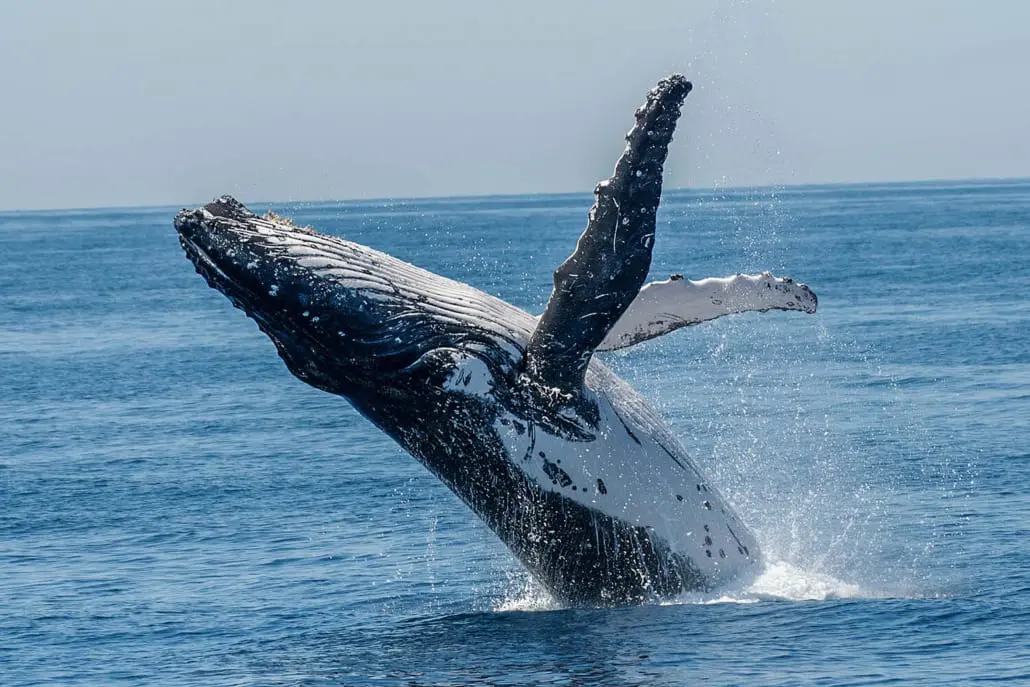
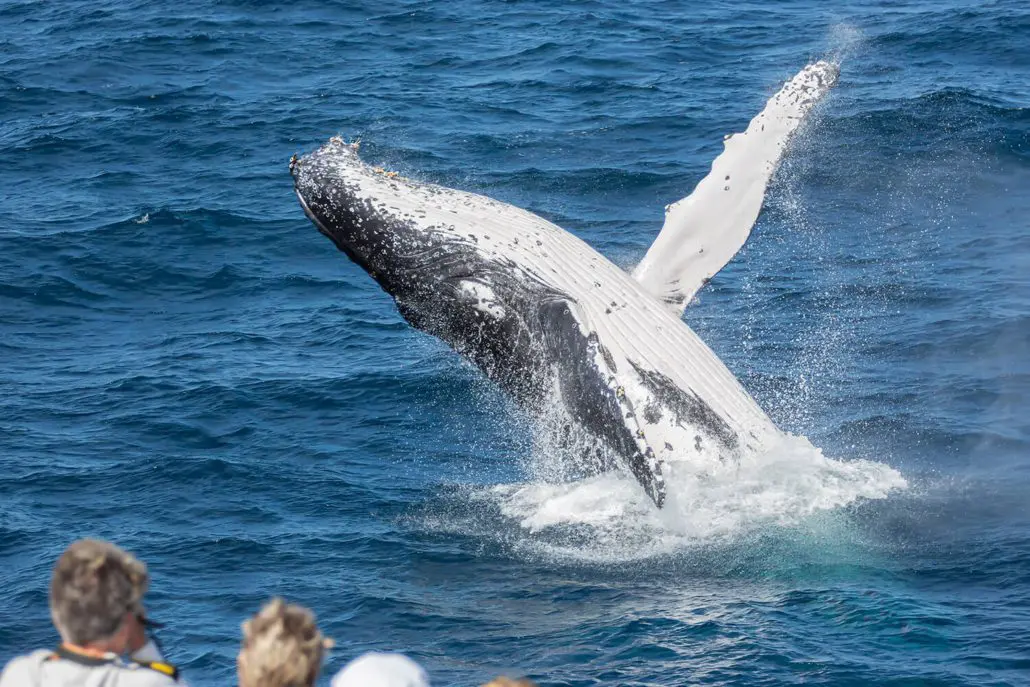
By July the Humpback Highway is busy. Whale watching in Bundaberg in July means adults in numbers, and it is the best month of the season for raw surface behaviour: breaching, pec slapping, and competitive pods where several males escort a single female. It is also when male song carries furthest, since the animals around us are heading to the breeding grounds rather than nursing.
July is the coldest water of the year and the heart of the Queensland dry season, which in practice means light morning winds, clear skies and the most settled mornings on the calendar. It also carries the winter school holidays, so dates book earlier than June.
August — the most whales in the water
August is the overlap month, and that's what makes it the statistical peak. The tail of the northbound migration is still moving through while the first southbound mothers are already coming back down with newborn calves. Whale watching in Bundaberg in August can put several distinct pods around the boat in a single trip, which is why it's the month photographers ask for.
The first calves of the season appear now, usually a few weeks old and still learning to breathe in rhythm with their mother. August is our busiest month; if you have fixed travel dates, book this one well ahead.
September — calves, and the closest encounters
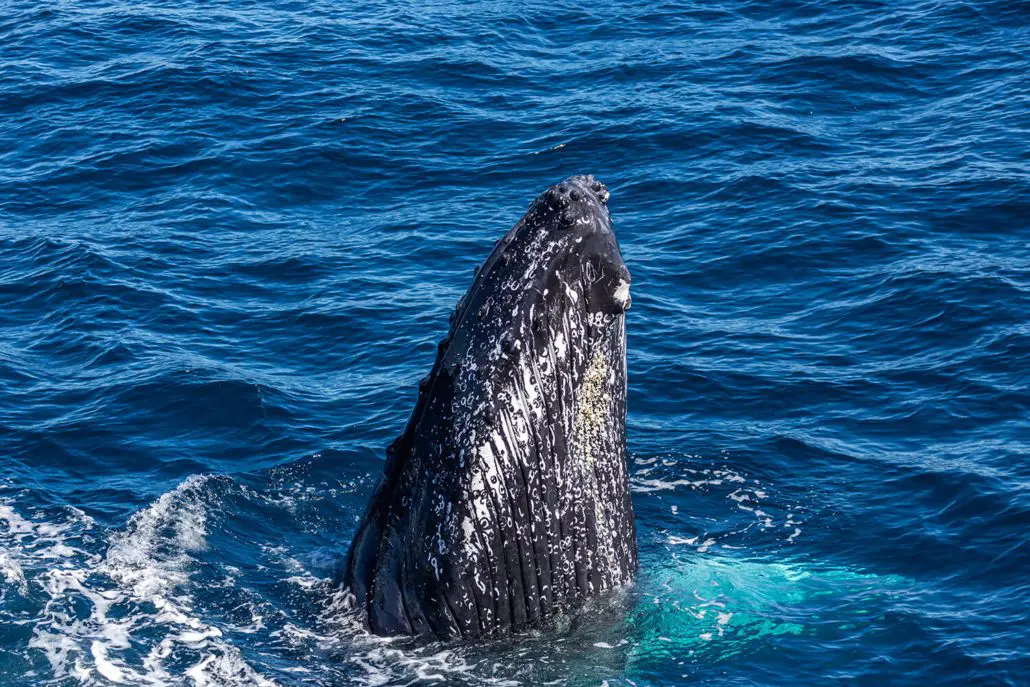
If you only get one day on the water, many of our crew would pick September. The population off Bundaberg is now dominated by mothers and calves resting in reef-sheltered water before the long push south, and resting whales behave completely differently to travelling ones: they linger, they surface repeatedly in the same patch of water, and calves — which are curious by nature — regularly approach the vessel of their own accord.
Whale watching in Bundaberg in September is also the gentlest month for anyone worried about seasickness, because the reef water the mothers choose is the calmest water we run in. Air temperatures are climbing out of winter without hitting summer humidity.
October — the quiet close of the season
October is the crossover. Whale watching in Bundaberg in October means fewer animals than the peak, but the ones still moving through are almost entirely mothers with calves that have grown strong over two months of milk — bigger, bolder and much more active at the surface than the newborns of August. Warming water and lengthening days make for comfortable conditions.
October is also the month the region's other wildlife calendar starts up: the first loggerhead turtles come ashore at Mon Repos, a twenty minute drive from the marina. Pairing a whale tour with a turtle night is the reason a lot of guests choose the end of the season over the middle of it.
Bundaberg whale season at a glance
| Month | Migration stage | What stands out | Calves |
|---|---|---|---|
| June | Early northbound | Empty water, open dates | No |
| July | Peak northbound | Breaching, competitive pods, song | Rare |
| August | Both directions | Highest whale numbers | First newborns |
| September | Southbound, resting | Closest, slowest encounters | Many |
| October | Late southbound | Grown, playful calves; turtles ashore | Yes, well grown |
Which month should you book?
For sheer numbers, August. For calves and close, calm encounters, September. For dramatic breaching and the quietest water traffic, July. For a trip that doubles as a turtle trip, October. There is no dead month in the Bundaberg whale season — but there is a right month for what you're hoping to photograph or show your kids.
For the wider Queensland picture, see our best time for whale watching in Queensland guide. For the route itself, read the humpback whale migration guide, or compare destinations in Hervey Bay vs Bundaberg. Fares and what the day includes are on the tour prices page.
CHECK AVAILABLE DATES