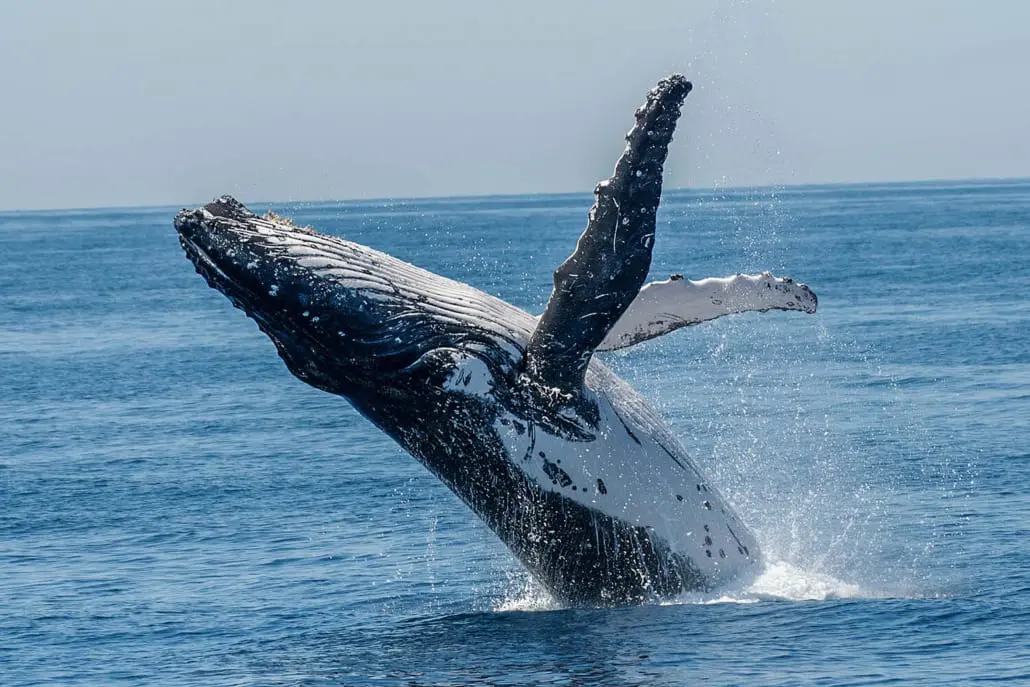
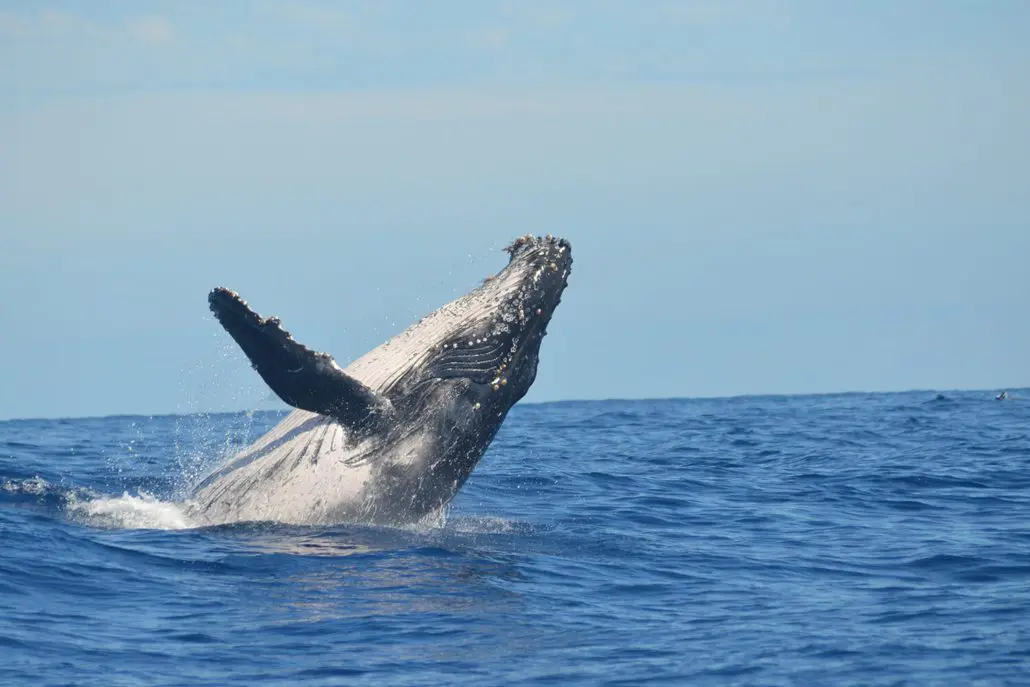
Anyone can see a breach. Spotting whales before they breach is a learnable skill, and it changes your whole day on the water — you stop waiting for something to happen and start noticing it early.
1. Look for the blow first
A humpback's exhale throws a bushy column of vapour three to four metres up, and it hangs in still air for several seconds. In good light it flashes white against blue. Scan the horizon line slowly rather than sweeping — your eye catches the vertical shape far more easily than the dark back beneath it.
2. Read the footprints
When a whale fluke pushes water upward it leaves a smooth circular slick on the surface — a "footprint" — that sits oddly flat against the surrounding chop. A trail of footprints tells you the direction of travel and roughly where the whale will come up next.
3. Follow the birds
Terns and shearwaters working a patch mark bait beneath them, and bait concentrates everything else. Birds won't lead you to a resting mother and calf, but they're a reliable sign that the water below is alive.
4. Stay on the same patch of water
Whales surface in series — several breaths over a minute or two, then a longer dive. When you lose one, hold your eyes on the same area rather than scanning away. Nine times out of ten it comes back within fifty metres of where it went down.
5. Choose your spot on deck
Higher gives you range; lower gives you intimacy. The top deck is best for finding whales at distance and for aerial-style photos when one comes close. The lower rail is where you want to be if a whale decides to mug the boat — at that point you're looking down into the water and straight into an eye.
6. Dress and prepare for the water
Polarised sunglasses cut the surface glare and genuinely help you see into the water. A hat and a light windproof layer make hours on deck comfortable. If you're prone to motion sickness, take something before boarding rather than after — the practical detail is in our family tours guide.
7. Put the phone down occasionally
Standard advice from every crew member who has watched someone experience a 30-tonne breach through a five-inch screen. Shoot the first pass, then watch the second one with your own eyes. If you want the shot as well, read our whale photography tips.
PUT IT INTO PRACTICE — BOOK A TOUR