Queensland's east coast waters host a genuine cross-section of marine mammals. Some you'll see on most trips, some are a once-a-season surprise. Here's who's out there and how to tell them apart from the deck.
Humpback whale
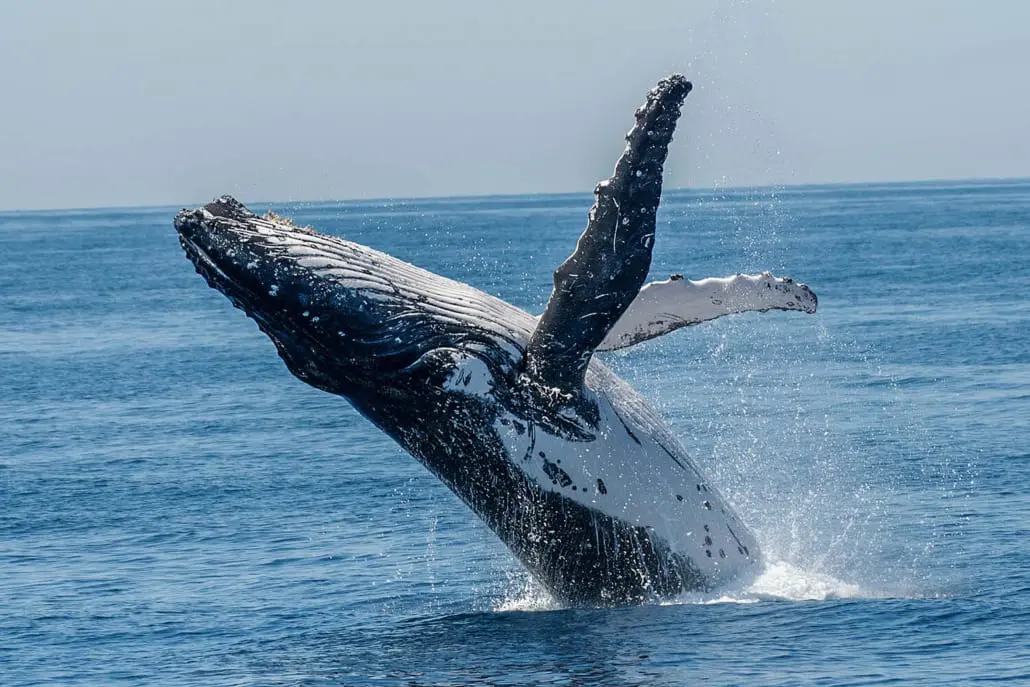
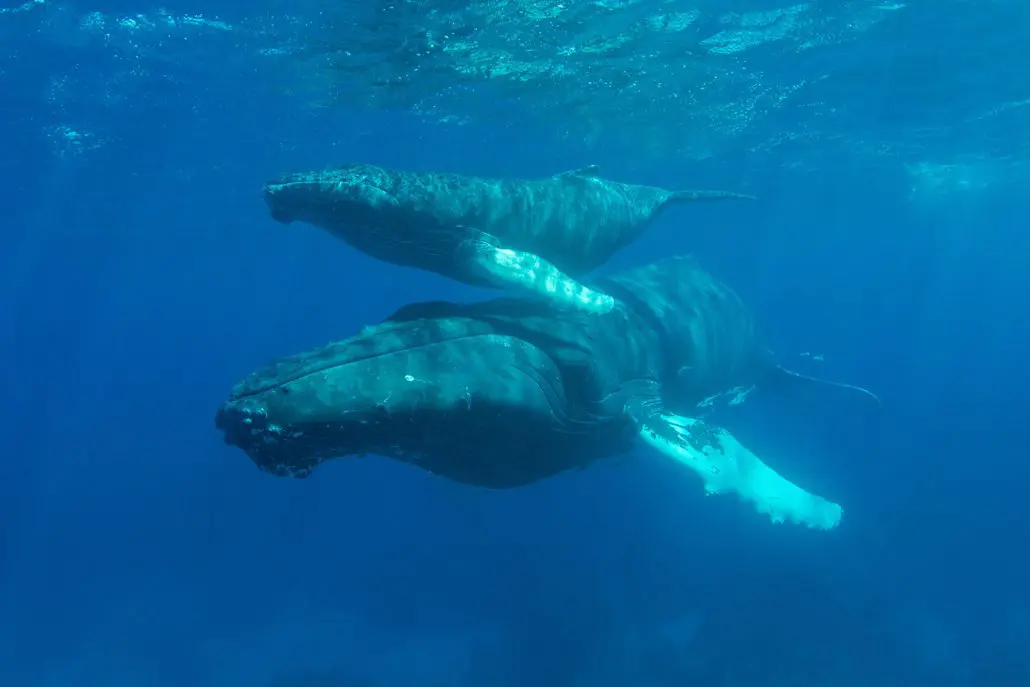
The species the season is built around. Up to 17 metres, knobbly head, enormous white-edged pectoral fins and a bushy blow three to four metres high. Fluke patterns are unique to each animal. Everything we know about them sits in humpback whale facts.
Dwarf minke whale
Smaller, sleeker and far quicker — around seven to eight metres, with a sharply pointed snout and crisp white shoulder markings. Best known on the northern reef in early winter, and occasionally encountered further south. Minkes are notoriously curious about stationary vessels.
Southern right whale
A rarer visitor this far north and always a talking point. No dorsal fin at all, a broad black back, and distinctive pale callosities on the head. Their blow is a V-shape when seen from behind. Numbers in eastern Australia remain low, so any sighting is reported.
Orca
Unmistakable and uncommon here — tall black dorsal fin, sharp white eye patch and saddle. Orca follow the migration looking for calves, and an encounter is one of the rarest things you can witness on this coast. See humpback whale predators.
Dolphins
Bottlenose dolphins ride the bow wave regularly, and spinner and common dolphins turn up in bigger offshore pods. Australian humpback dolphins occur in inshore Queensland waters and are far scarcer. A pod working bait with terns overhead is the first thing you notice on the run out.
And everything else
Green and loggerhead turtles, manta rays, dugongs in seagrass country, shearwaters, terns and frigatebirds. The Southern Great Barrier Reef is a working ecosystem, and a whale day delivers half of it — more in whale watching on the Southern Great Barrier Reef, and in our sightings log.
Look at the blow before the body. A tall bushy column means humpback; a low, fast puff means minke; a V-shaped blow means southern right. You'll identify the species before you ever see its back.