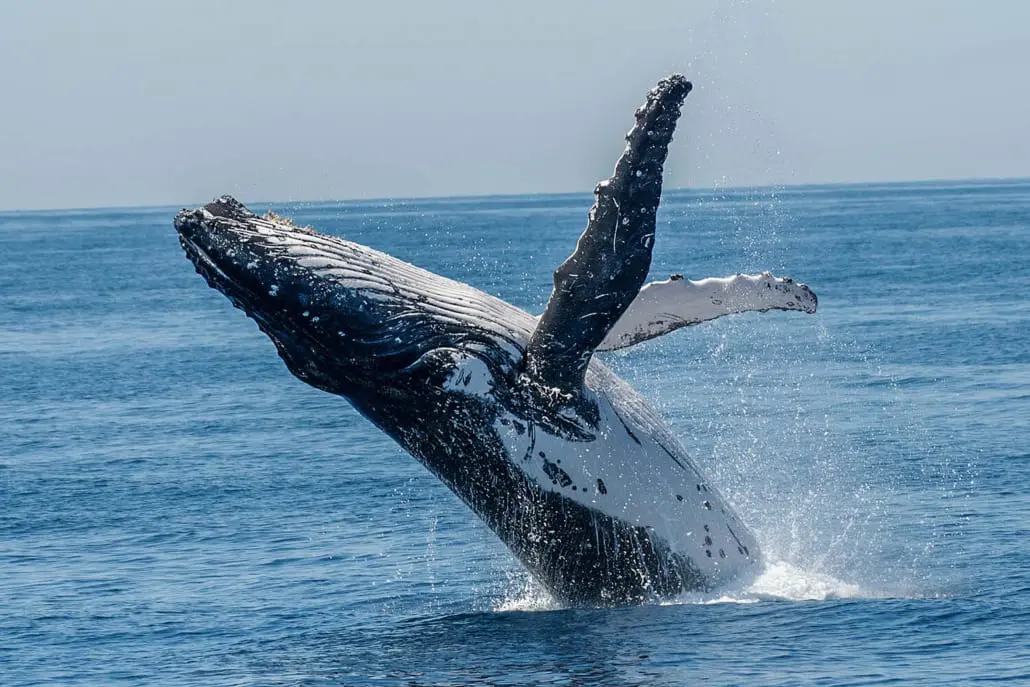
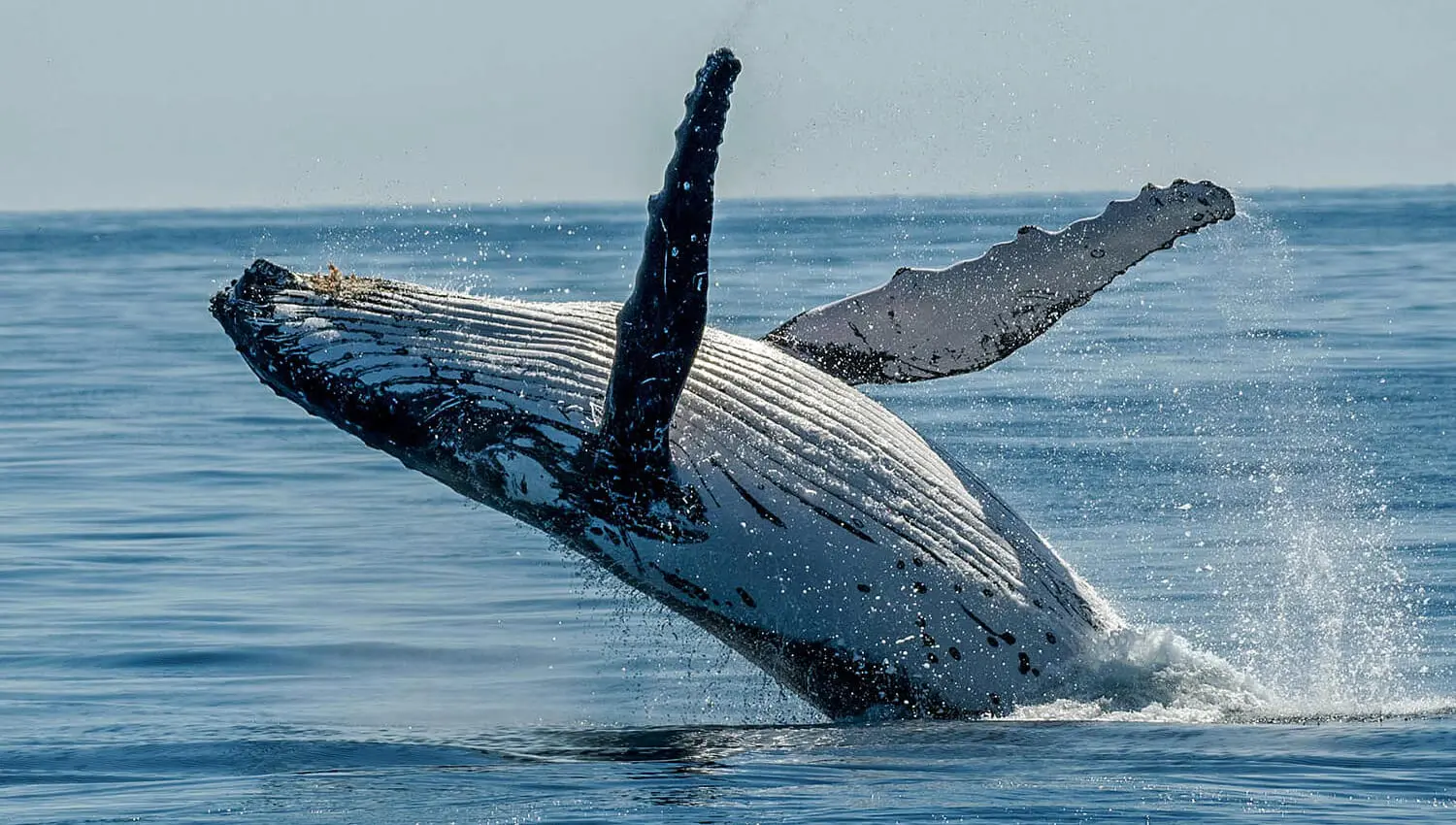
A singing humpback can hold a single composition for hours, repeating it with the precision of a musician working from a score — and every male in the population is singing broadly the same thing at the same time.
How a song is built
Researchers describe humpback song in a hierarchy. Individual sounds — moans, groans, cries, chirps — are units. A run of units makes a phrase. Repeated phrases make a theme. Several themes in a fixed order make the song, which the whale then repeats for hours without a significant break. That nested structure is why the word "song" stuck rather than "call".
Who sings, and where
Singing is almost entirely a male behaviour, concentrated on the breeding migration rather than the Antarctic feeding season. A singer typically hangs head-down in the water column, motionless, surfacing only to breathe before resuming. Humpbacks have no vocal cords — the sound is produced by moving air through the larynx and recycling it internally, which is how a whale can sing without exhaling a bubble.
Why they do it
The honest answer is that nobody is certain. The leading explanations are mate attraction, male-to-male signalling that spaces singers out and advertises fitness, and a role in coordinating movement during migration. These aren't mutually exclusive, and evidence supports parts of each.
The Australian connection
East Australian humpbacks are famous in the research literature for song revolutions: new song types that appear on this coast and then spread eastward across the South Pacific over a season or two, population to population, until whales thousands of kilometres away are singing the Australian tune. It's one of the clearest examples of cultural transmission known outside humans — and it happens in the water the whales pass on their way by Bundaberg.
Can you hear it on a tour?
Sometimes, in the most literal way: with the engines off and a singer below, the sound can carry through the hull as a low vibration you feel as much as hear. It isn't something we can promise on any given day — but when it happens, the whole boat goes silent.
Noise is the threat
Song only works if it travels. Shipping, seismic survey and construction noise all raise the background level in the ocean and shorten the distance over which whales can hear each other — one of the quieter pressures covered in are humpback whales endangered?
BOOK A WHALE WATCHING TOUR