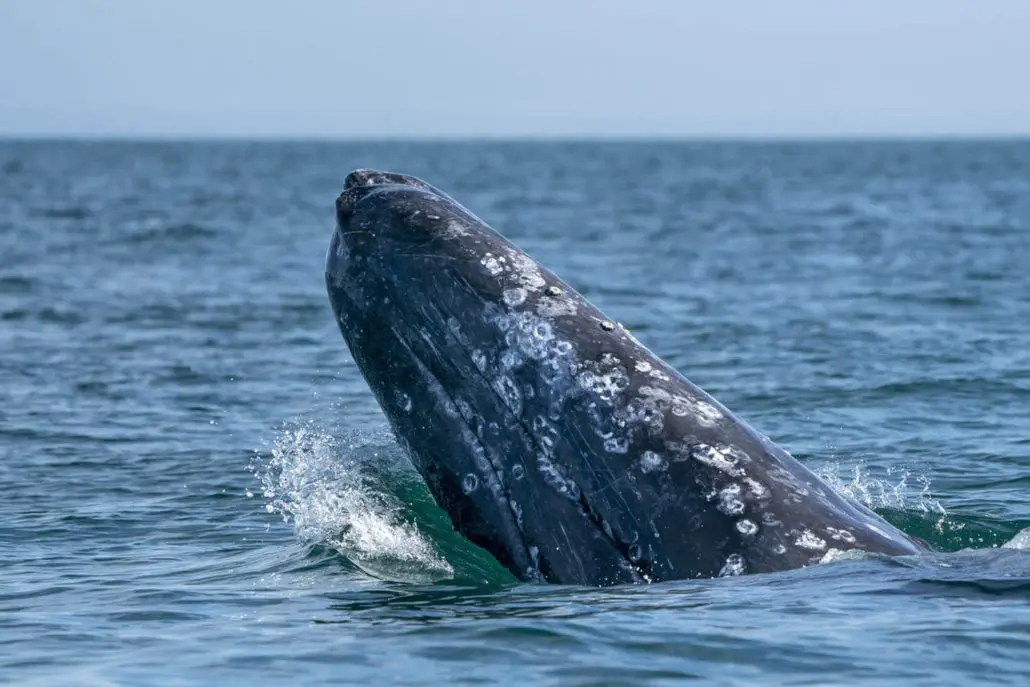
Humpback whales are some of the most extraordinary creatures in the ocean, known for their sheer size, unique behaviours and haunting songs. Understanding them helps us appreciate the role they play in keeping marine ecosystems healthy.
Size and anatomy
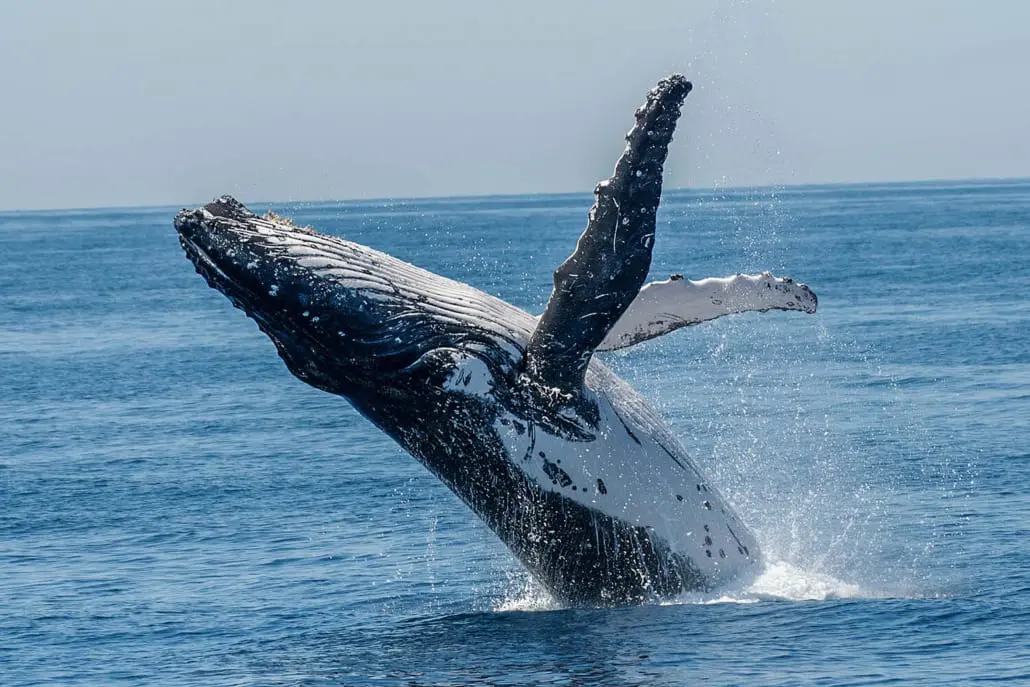
Adult humpbacks reach 14 to 17 metres and weigh up to about 40 tonnes, with females slightly larger than males. Their pectoral fins are the longest of any whale — up to five metres, roughly a third of body length — which is where the scientific name Megaptera novaeangliae, "big wing", comes from. Those fins give them extraordinary agility for an animal the size of a bus.
The knobbly bumps along the head are tubercles, each containing a hair follicle that likely senses movement in the water. The pattern of markings on the underside of the tail fluke is unique to each whale, which is how researchers identify individuals year after year.
Song
Males produce long, structured songs that can last for hours and travel many kilometres underwater. Every whale in a population sings broadly the same song, and that song evolves through the season — east Australian humpbacks are famous among researchers for song patterns that spread west across the Pacific. Scientists believe song plays a role in breeding and in communication during migration.
Surface behaviour
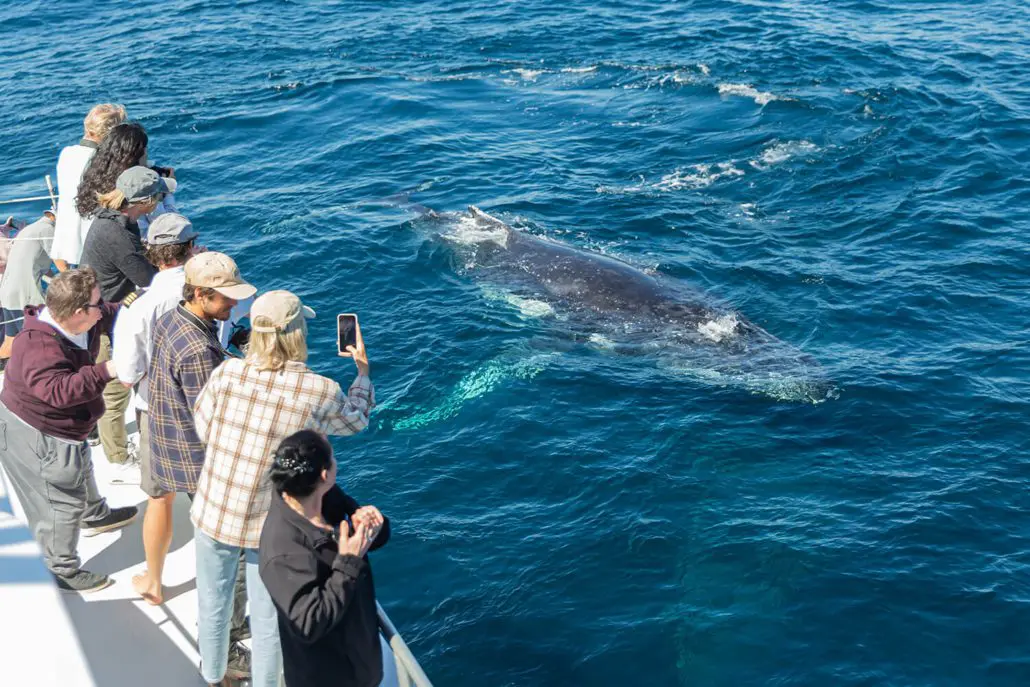
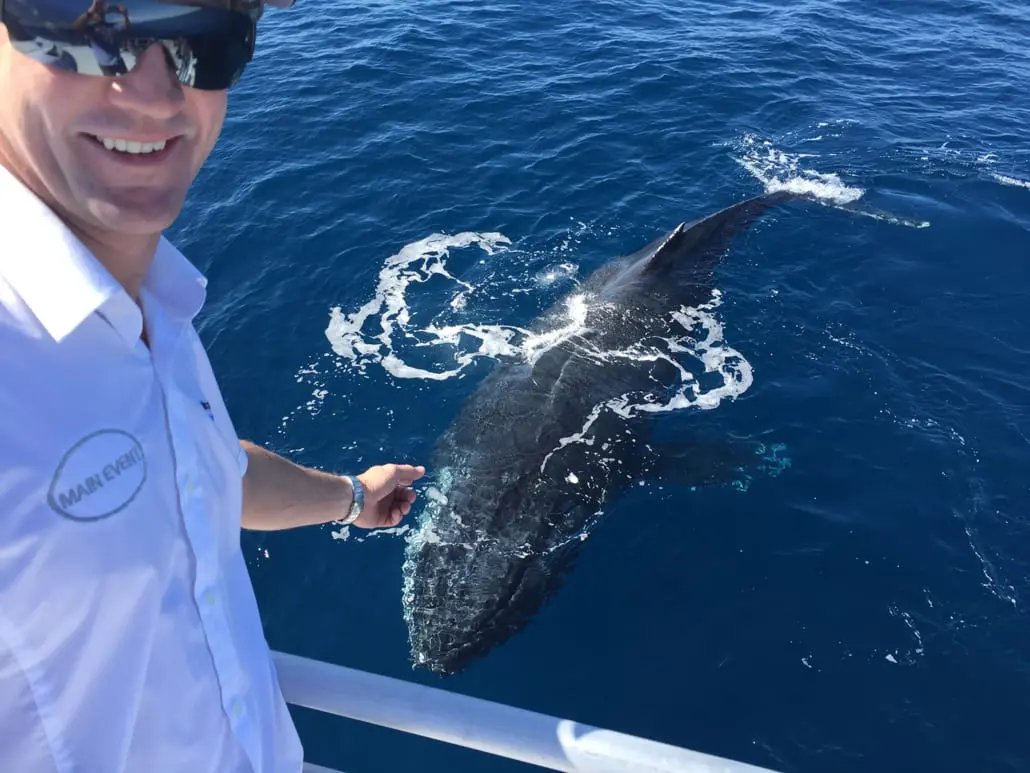
Humpbacks are the most acrobatic of the large whales. They breach clear of the water, slap the surface with pectoral fins and tails, and spy-hop — rising vertically to look around above the waterline. On our tours the behaviour guests remember most is "mugging", when a curious whale chooses to approach the vessel and hangs beside it, rolling to look up at the people looking down.
Bubble-net feeding
One of the most remarkable feeding strategies in the animal world: a group dives beneath a school of fish and releases a rising curtain of bubbles that herds the prey into a tight ball, then the whales surge up through the middle with mouths wide open. It is cooperative, learned behaviour — different populations do it differently.
Mothers and calves
Calves are born in warm winter water at around four to five metres long and gain weight fast on milk that is roughly half fat. A mother and calf pair travelling slowly through the Southern Great Barrier Reef is one of the great sights of the Queensland season — and one of the reasons the sheltered water here matters so much to the population.
The threats that remain
Despite a strong recovery since commercial whaling ended, humpbacks are still vulnerable to entanglement in fishing gear, vessel strike, underwater noise and shifts in the krill supply driven by a warming Southern Ocean. Read more in our guide to whether humpback whales are endangered.