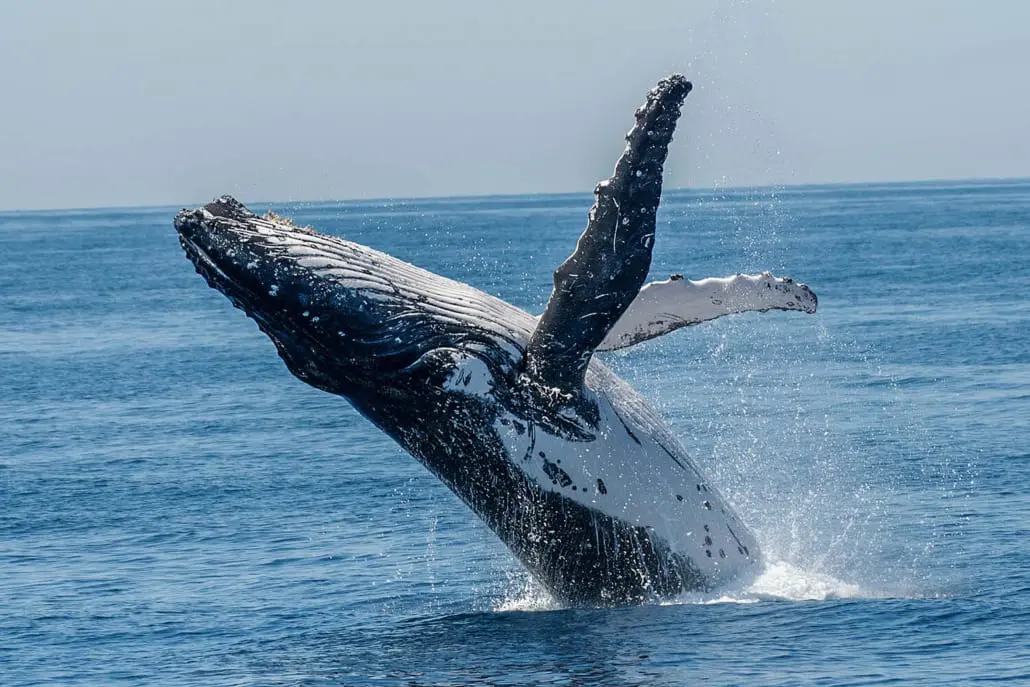
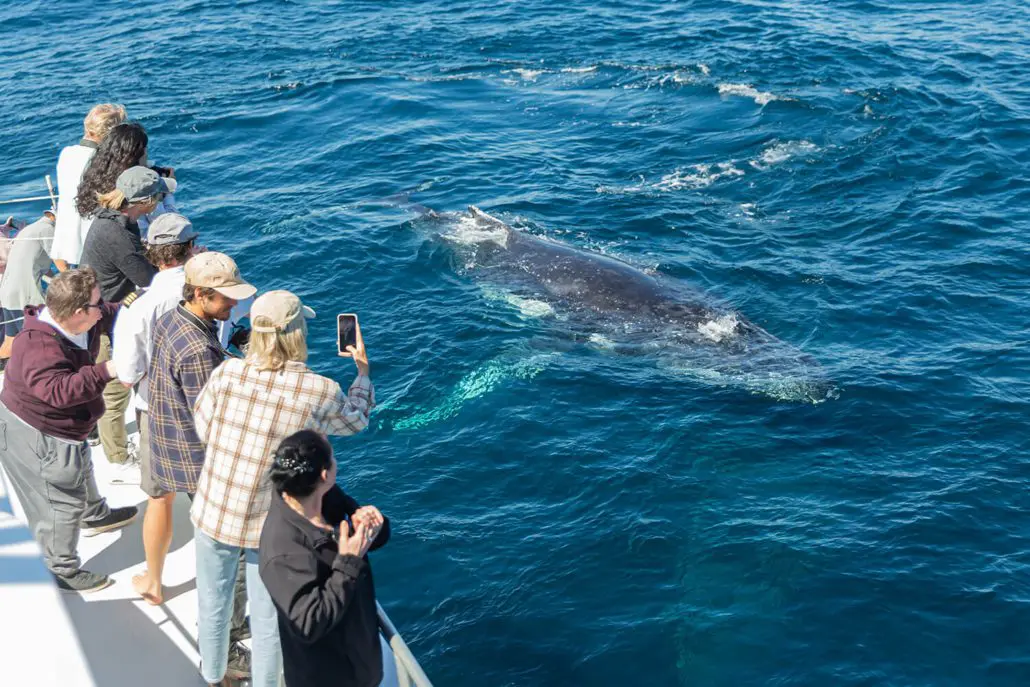
The best time for whale watching in Queensland is August and September, the peak of the humpback migration, when northbound and southbound whales overlap and mothers rest with new calves in sheltered reef water. The wider season runs from June to October, with the calmest, closest encounters in October.
The short answer: August and September. The longer answer depends on what you want to see — the fast, boisterous northbound run, or the slow, close encounters with mothers and calves heading home.
Month by month
| Month | Whale activity | What you see | Booking pressure |
|---|---|---|---|
| June | Season opens, whales arriving | Northbound travel, first blows and breaches | Low |
| July | Numbers building | Breaching, pec slapping, competitive pods | Moderate |
| August | Peak | Northbound and southbound overlap, first calves | High — book early |
| September | Peak | Mothers and calves resting in sheltered reef water | High — book early |
| October | Southbound tail of the season | Slow, close encounters with curious calves | Moderate |
Season shape varies year to year. Our sightings log records what each month actually produced.
What else is happening while you are here
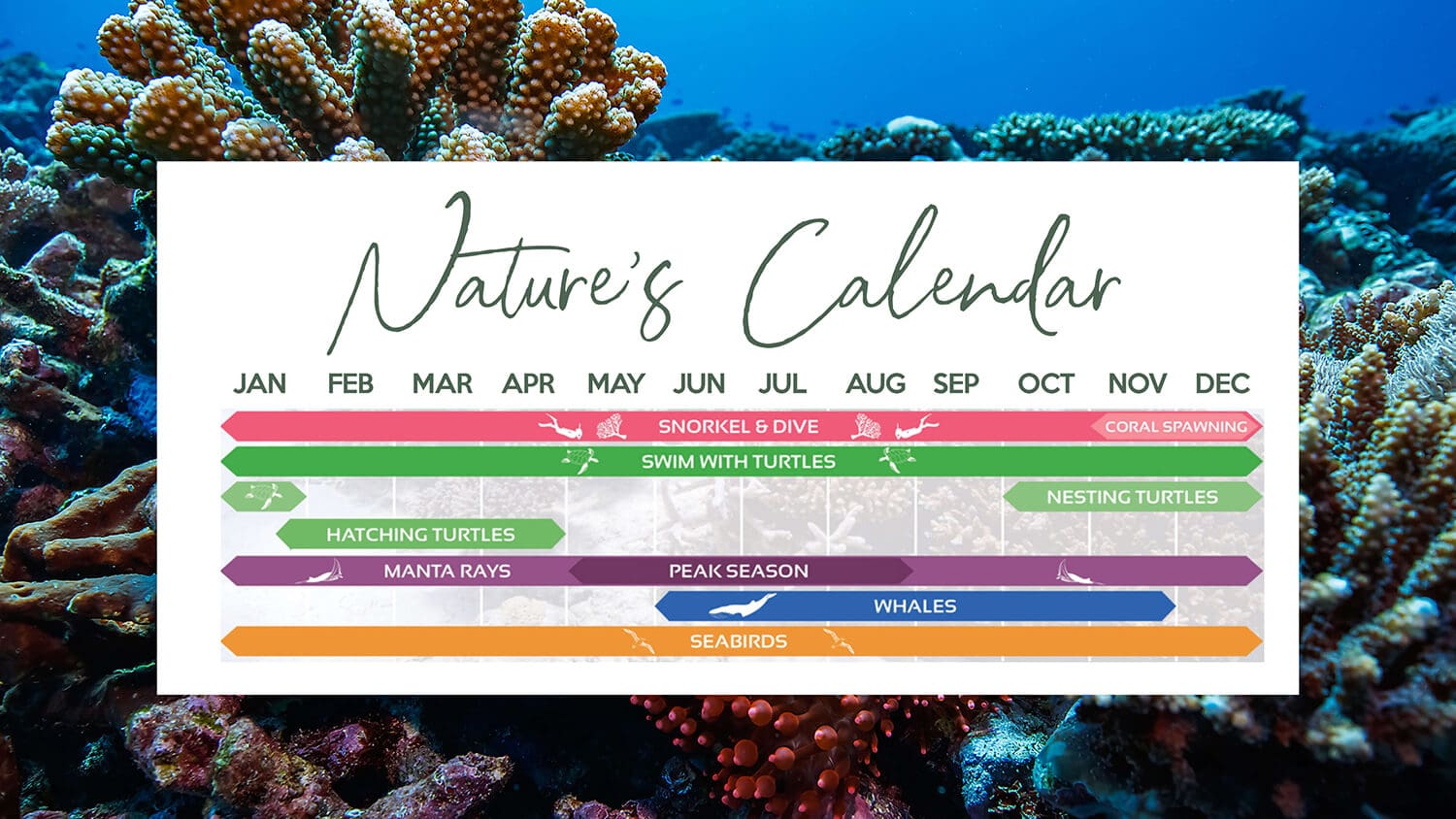
Whale season overlaps several other events on this stretch of reef, which matters if you are building a trip rather than booking a single day.
| Wildlife event | When | Overlaps whale season |
|---|---|---|
| Humpback whales | June – October | — |
| Swim with turtles | All year | Yes, every month |
| Manta rays | All year, peak May – August | Yes, peak sits inside whale season |
| Snorkel and dive conditions | All year | Yes — the reason the two-day combo works |
| Seabird nesting | All year | Yes |
| Nesting turtles | October – January | October only |
| Hatching turtles | January – April | No |
| Coral spawning | November – December | No |
October is the crossover month: the last southbound whales and the first nesting turtles. If you want both in one trip, the two-day reef and whale combo pairs a whale day with a Lady Musgrave Island reef day.
Time of day and weather
Queensland winter is the dry season: mild days, low humidity and light morning winds are typical, which is part of why the whale season is also the nicest time to be on the water here. Mornings bring the flattest conditions. Light through the middle of the day gives the best underwater colour when a whale rolls beside the hull.
Picking your date
School holidays and long weekends fill first. If you're travelling a distance, give yourself a spare day in Bundaberg so weather can't cost you the trip. Live availability is on the bookings page, or call (07) 4151 5225 and we'll tell you honestly how the current weeks are running.
For what each month looks like specifically from our departure point, see whale watching Bundaberg month by month.
For the biology behind the calendar, read the humpback whale migration guide.
SEE AVAILABLE DATES