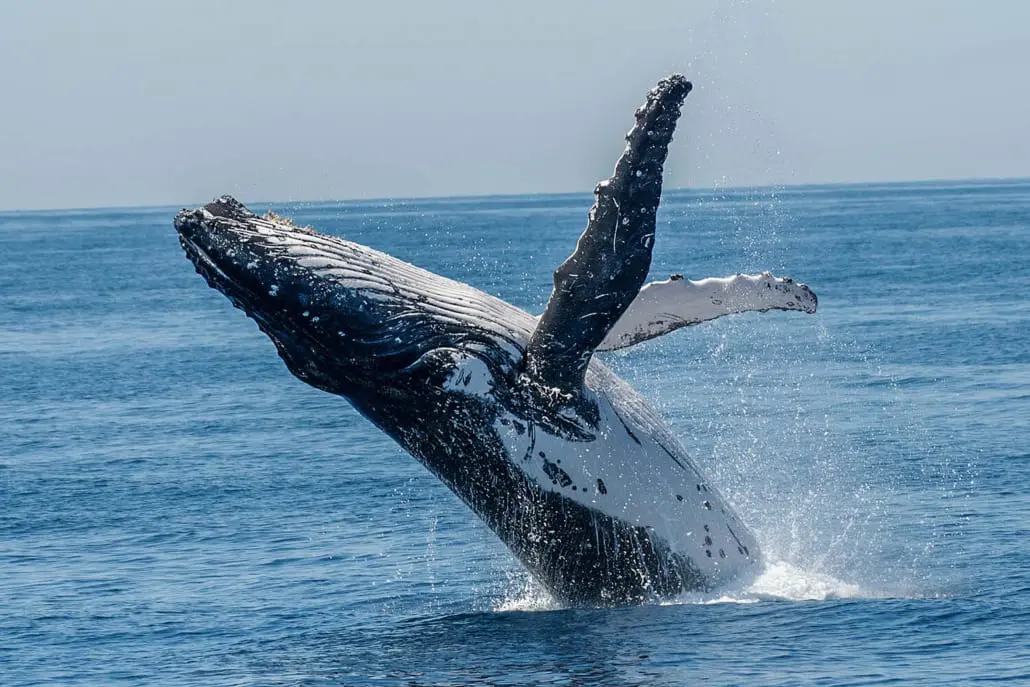
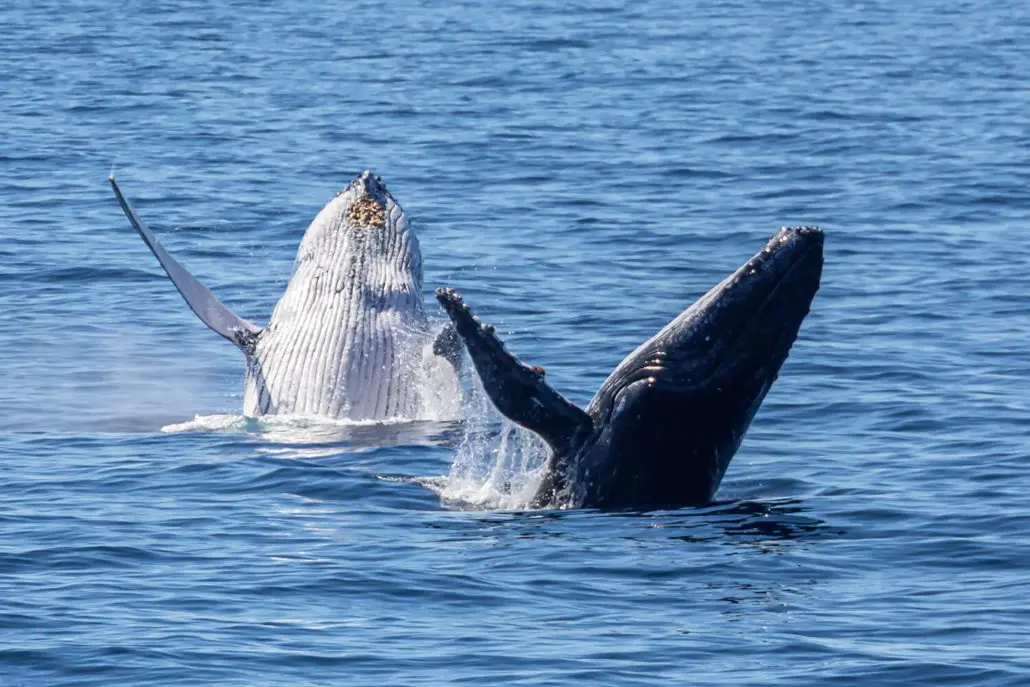
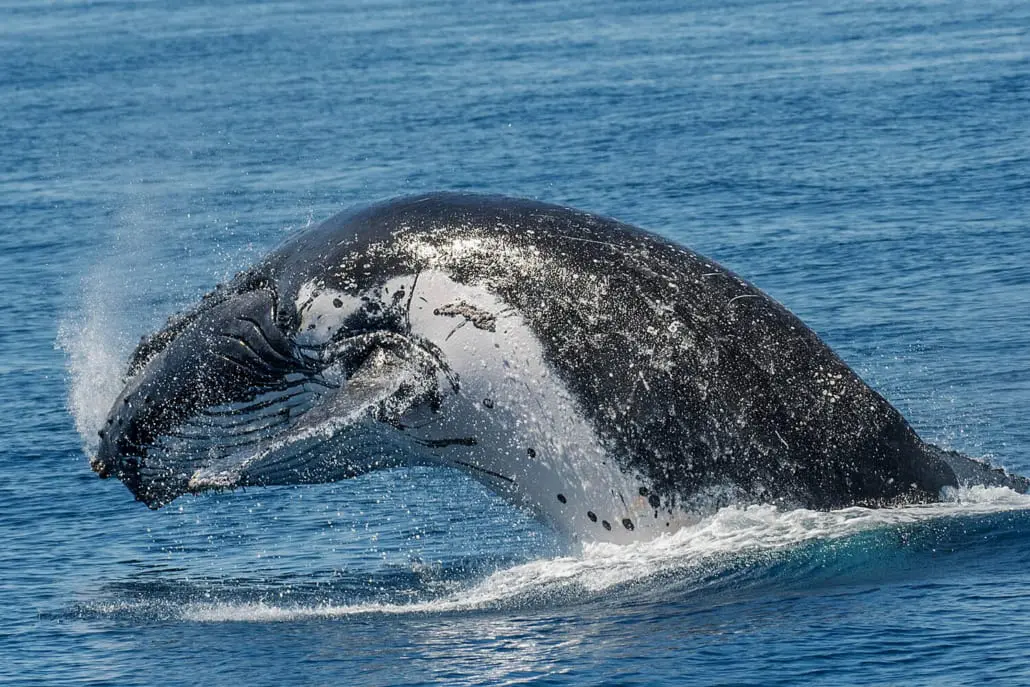
A full-grown humpback has essentially one natural predator: the orca. Even then, attacks on healthy adults are rare. The risk sits almost entirely with calves on their first migration.
Orca
Mammal-hunting orca work in coordinated groups, separating a calf from its mother and trying to keep it from surfacing to breathe. Encounters are documented along the Australian coast, particularly in Western Australia's Bremer Canyon, and occasionally on the east coast migration. Most humpbacks carry the evidence: parallel white scars on the tail fluke and trailing edge, known as rake marks, made by orca teeth in an attack the whale survived as a calf.
Sharks
Large sharks are opportunists rather than hunters here. They will take a very young, sick or injured calf, and they scavenge carcasses, but a healthy humpback of any age is not typical shark prey. Cookiecutter sharks leave their distinctive circular bite scars on the skin without posing any real danger to the animal.
How a mother defends her calf
Mothers keep calves close, and position them on the side away from a threat, push them to the surface, and use their tails and five-metre pectoral fins as weapons. Adult escorts frequently travel with a mother and calf and join the defence. Humpbacks are also known for intervening in attacks that have nothing to do with them — disrupting orca hunts on seals and other whales, a behaviour researchers are still working to explain.
The real threat is not a predator
Across the east coast population, entanglement in fishing gear and vessel strike cause far more deaths than orca ever do. Read the detail in are humpback whales endangered?
 BOOK A WHALE WATCHING TOUR