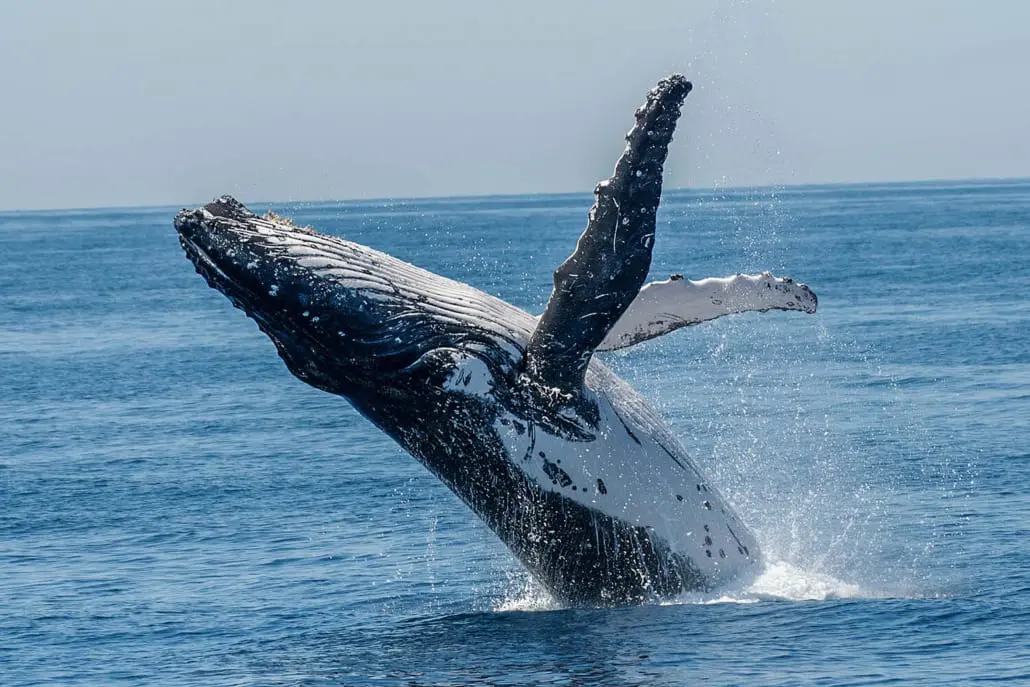
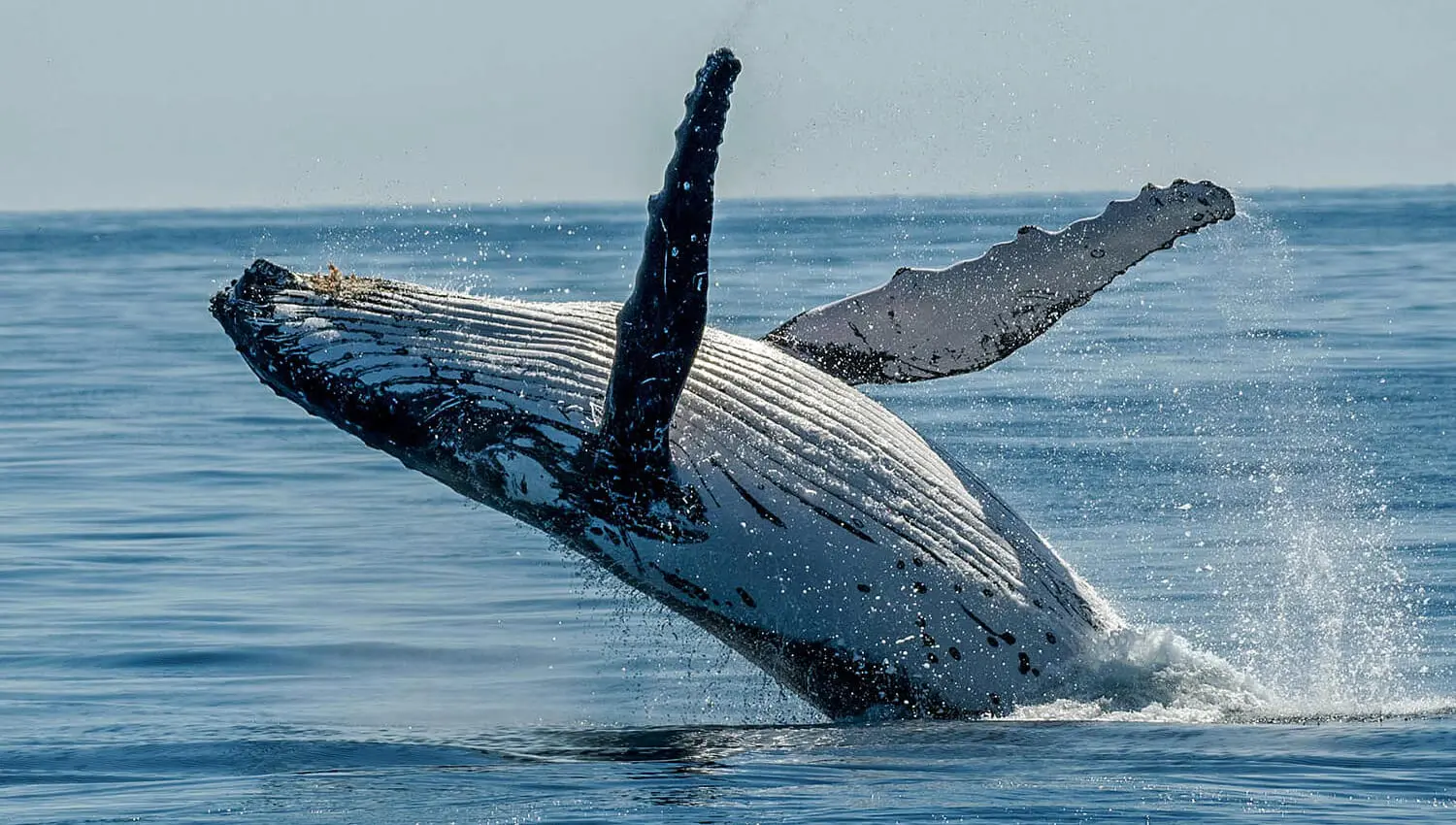
Humpback whales are not classed as endangered. The IUCN lists the species as Least Concern globally, and Australia removed the humpback whale from its national threatened species list in 2022 after the east coast population recovered. The species remains fully protected under the EPBC Act and within the Australian Whale Sanctuary.
Globally, the humpback whale is no longer classed as endangered. The IUCN lists the species as Least Concern, reflecting a strong worldwide recovery since commercial whaling ended — though several regional subpopulations elsewhere in the world remain endangered.
Status in Australia
Australia's east coast population recovered so strongly that the humpback whale was removed from the national threatened species list in 2022. It remains fully protected: humpbacks are a listed migratory and marine species under the EPBC Act, and all cetaceans are protected in the Australian Whale Sanctuary, which covers Commonwealth waters. Queensland legislation and Great Barrier Reef Marine Park rules add further protection, including the approach distances every operator must observe.
What nearly ended them
Twentieth-century industrial whaling took humpbacks in enormous numbers across the Southern Hemisphere, and the east Australian population was reduced to a few hundred animals before hunting stopped here in 1963. The recovery since is one of the clearest demonstrations anywhere that protection works — given time and space, a slow-breeding animal can rebuild.
The threats that remain
Fishing gear, ropes and shark nets along the migration route are the leading cause of injury and death for east coast humpbacks.
More whales and more boats sharing coastal water means collisions — which is why speed and approach rules exist.
Shipping, seismic surveys and construction mask the songs and calls whales use to find each other.
Warming water and shrinking sea ice affect the Antarctic krill swarms the whole population depends on.
How we operate
We hold eco certification and work to the approach distances set for Queensland and the Great Barrier Reef Marine Park: we never chase, never cut across a whale's path, and put the engine in neutral when a whale chooses to come to us. Guests don't swim with the whales. Watching well is the point.
Conservation listings change. This page reflects the position as at 2026 — check the Department of Climate Change, Energy, the Environment and Water and the IUCN Red List for the current official status.
BOOK A WHALE WATCHING TOUR