Swimming with humpback whales is not legal in most Australian waters. A person in the water must stay at least 30 metres from a whale, and vessels 100 metres, or 300 metres where a calf is present. A small number of licensed operators hold permits for swim-with programs at Hervey Bay and Ningaloo Reef. Australia Whale Experience tours are watch-only.
Mostly, no. Australian law sets minimum distances between people and whales, and swimming with them is only permitted in a small number of places under specific government permits. Everywhere else — including on our tours — you watch from the boat.
The rules in plain terms
Under the national regulations and their Queensland equivalents, a person in the water must not approach closer than 30 metres to a whale, and vessels must stay at least 100 metres away — 300 metres where a calf is present. Caution zones extend further again, limiting speed and manoeuvring. The rules also prohibit chasing, blocking a whale's path or separating animals in a pod.
Importantly, the distance obligation is on the person, not the whale. If a curious humpback decides to swim over and hang beside the boat — "mugging" — that's the whale's choice, and the correct response is to hold position, put the engine in neutral and let it do so.
Where swim-with tours exist
A handful of licensed operators run permitted swim-with-whales programs in tightly controlled locations — Hervey Bay and Ningaloo Reef in Western Australia are the best-known examples. These operate under conditions covering group size, entry method and how the encounter must be ended. Outside those permits, entering the water with whales is an offence and can attract significant penalties.
Why we don't swim with them
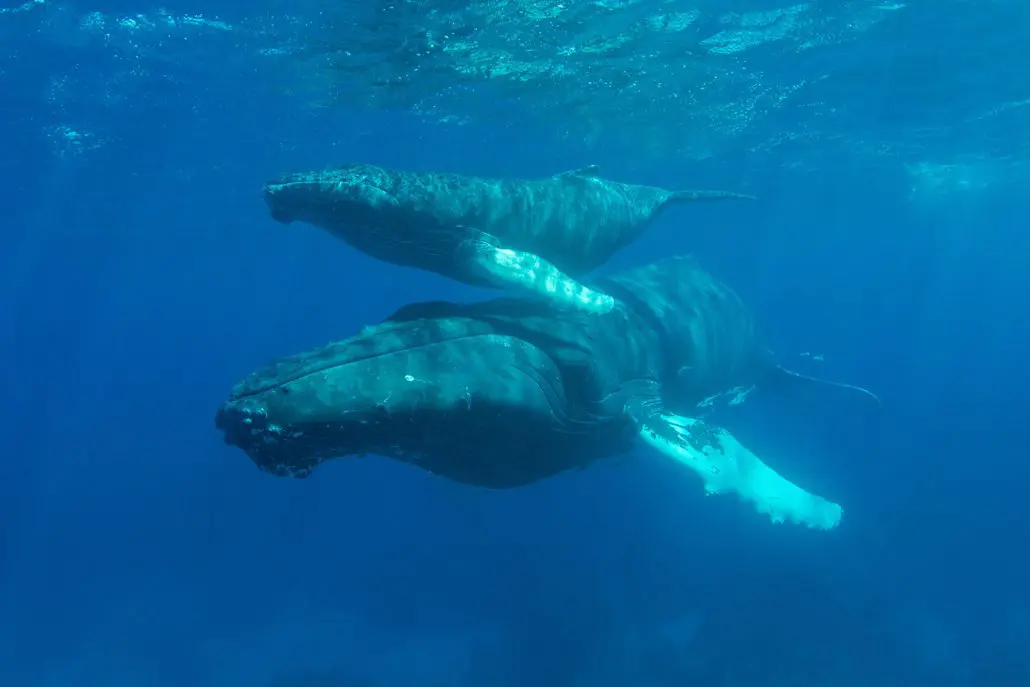
Beyond the law, there's the welfare case. The whales passing Bundaberg are fasting, and many are mothers resting with new calves. Every disturbance costs energy they can't replace until they reach Antarctic water again. Swimming with them can interfere with natural behaviour and, in some cases, stress the animals — so we don't allow it.
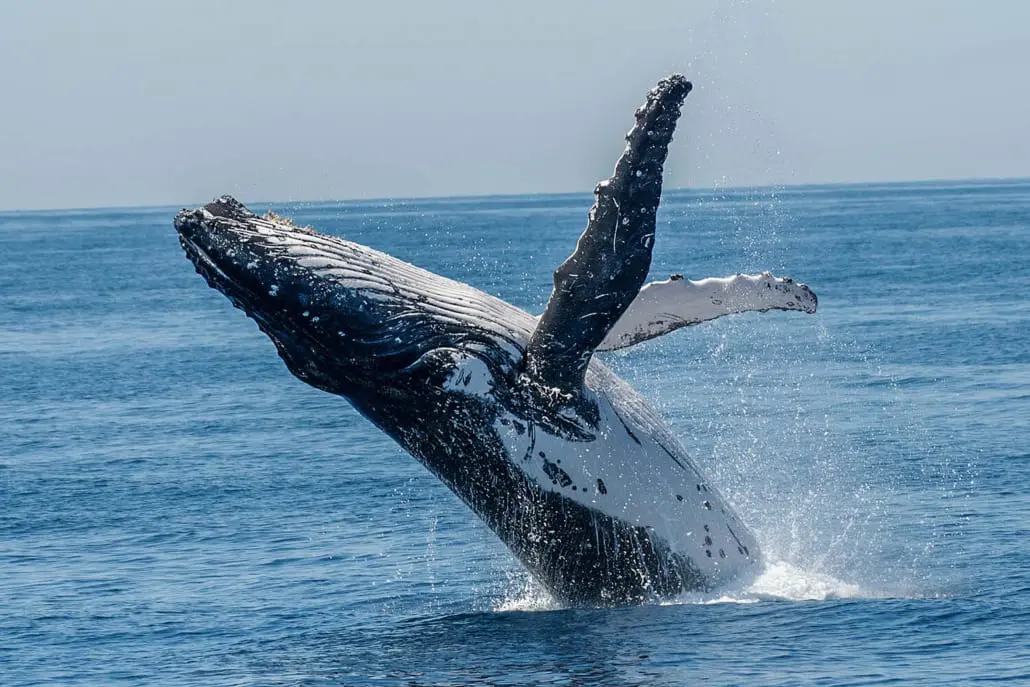
It also isn't necessary. From the deck of the catamaran you see the whole animal, the whole behaviour and the whole pod — breaches, tail slaps, spy-hops and mothers teaching calves — with a crew explaining what you're looking at. The view is better from up here.
Regulations are updated from time to time. This page reflects the position as at 2026 — check the Australian Government and Queensland Department of Environment guidance, and Great Barrier Reef Marine Park Authority rules, for current requirements.
BOOK A WHALE WATCHING TOUR